If you’ve ever stared helplessly at a plunging chart—congratulations, you’ve met the moment when stop loss or stop limit orders could’ve saved your stash.
These aren’t fancy finance spells reserved for Wall Street wizards; they’re tools that help you manage risk while trading. Think of them like airbags for your portfolio.
By the end of this guide, you’ll know exactly how to leverage stop loss and stop limit orders and how to integrate them into your crypto survival kit.
Ready? Read on and learn how to limit your losses before they snowball.
What is a stop loss order?
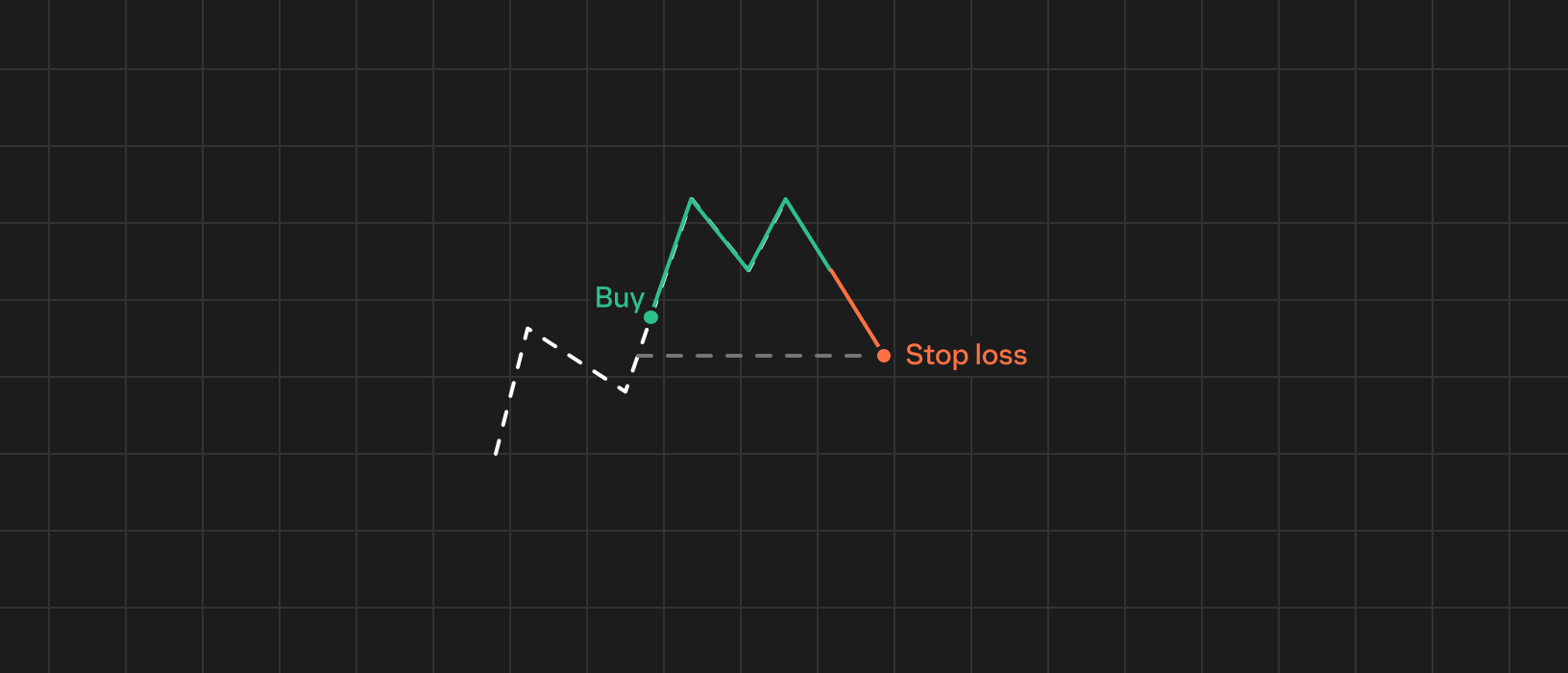
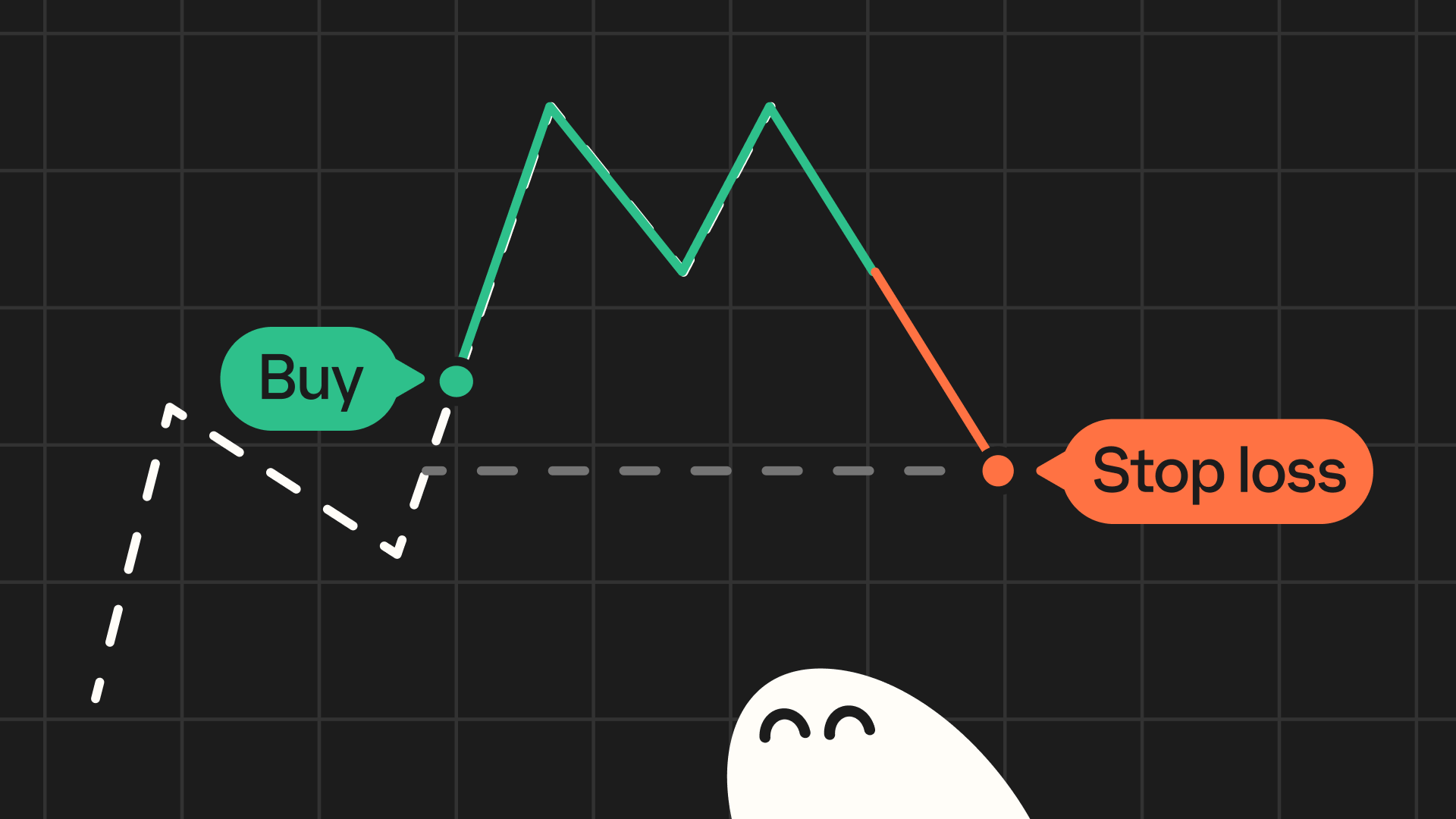
A stop loss order lets you automatically trigger an attempt to sell a position if its price drops to a level you choose. In simple terms, you set a “stop” price below your entry price, and if it is reached, the trading platform sells your position at the current market price. In other words, it’s designed to help set a floor on how much you could lose.
Learn more in our in-depth stop loss order guide.
What is a stop limit order?
A stop limit order also automatically places an attempt to sell when a price is hit, but it adds a condition to control the price you get. You set two prices: a stop price (trigger) and a limit price. When the market reaches the stop price, a limit order is placed at your limit price. In plain terms, you’re saying “if the price hits $X, then sell at $Y or better”.
Learn more in our in-depth limit order guide.
Key differences: stop loss vs. stop limit order
- Order type: A stop loss order becomes a market order when triggered, while a stop limit order becomes a limit order.
- Execution vs. price: A stop loss order is designed to execute once triggered (since it sells at market), but the price could be lower than your stop if the market is falling fast. A stop limit order will only execute at your limit price or higher, but it might not execute at all if the price jumps below that limit (price gap).
- Simplicity: A stop loss order uses only one price (the stop). A stop limit order uses two prices (stop and limit), which means it takes a bit more time to set up.
- Speed vs. control: Stop loss orders are simpler and focus on exiting quickly, while stop limit orders focus on price control.
In summary, stop loss orders favor execution (getting you out of a trade), and stop limit orders favor price control (getting you a better price). Both tools are designed to protect you from big losses, but neither can guarantee protection in all market conditions.
When to use stop loss orders vs. stop limit orders
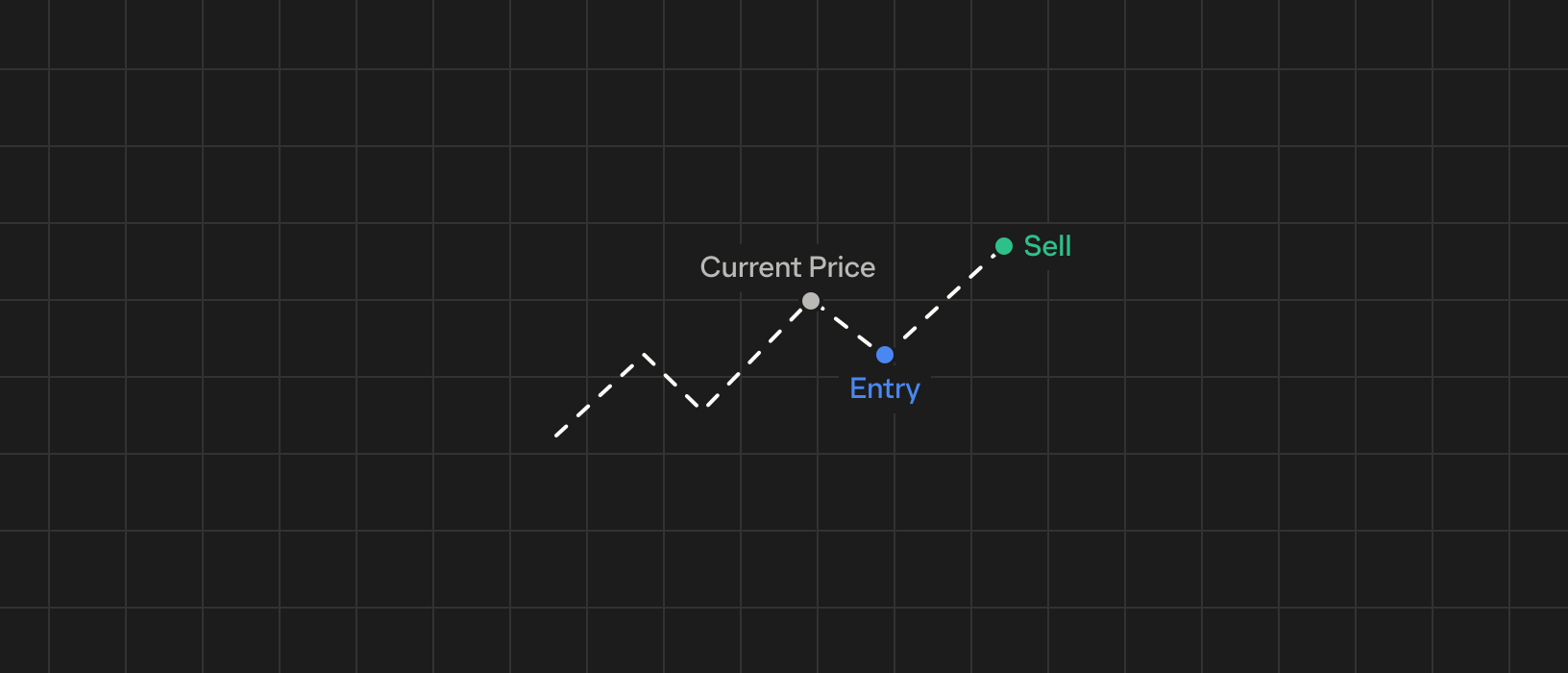
- Stop loss: Use a stop loss order when you want to increase the likelihood of exiting a trade if the price drops to your stop, even if the market price is worse. This is good if you’re worried about a sudden crash or can’t watch the market closely. For example, if BTC is at $115,000 and you fear a big drop, placing a stop-loss at $110,000 will likely trigger a sale near that level, helping reduce potential losses from a deeper fall. You won’t control the exact sell price, but you will be out of the trade.
- Stop limit: Use a stop limit order when you care more about the price you sell at and are willing to risk the order not filling. For instance, if SOL is around $235, you could set a stop at $230 and a limit at $225. If SOL drops to $228, a limit order at $225 is activated. And if SOL falls all the way to $225, your order may fill at that price. This way you avoid selling before and below $225, but you accept that in a fast crash you might not sell at all (price gap).
Order trading with Phantom
Beyond spot trading, Phantom Perps enables eligible users in permitted jurisdictions to trade perpetual futures using various order types.
Most perps platforms today are designed for pros with complex trading features, which can be challenging and potentially dangerous for inexperienced users. But with Phantom’s intuitive, mobile-first design, you can easily open, close, and manage positions directly within your wallet. Even so, the same underlying risks apply, regardless of the fact that Phantom Perps may feel more straightforward to use.
FAQs
Disclaimer: This content is for general educational purposes only. It is not financial advice, investment guidance, or a solicitation to buy, sell, or trade any assets, products, or services. Past performance is not indicative of future results. Any examples or strategies discussed are for illustrative purposes only and should not be considered as recommendations. Perpetual futures are complex, high-risk instruments that are not suitable for all investors. Phantom Perps are not available everywhere. This guide is not intended for UK audiences.